Article Collecting
Collectors of our time
BAM Editorial · · 3 min read
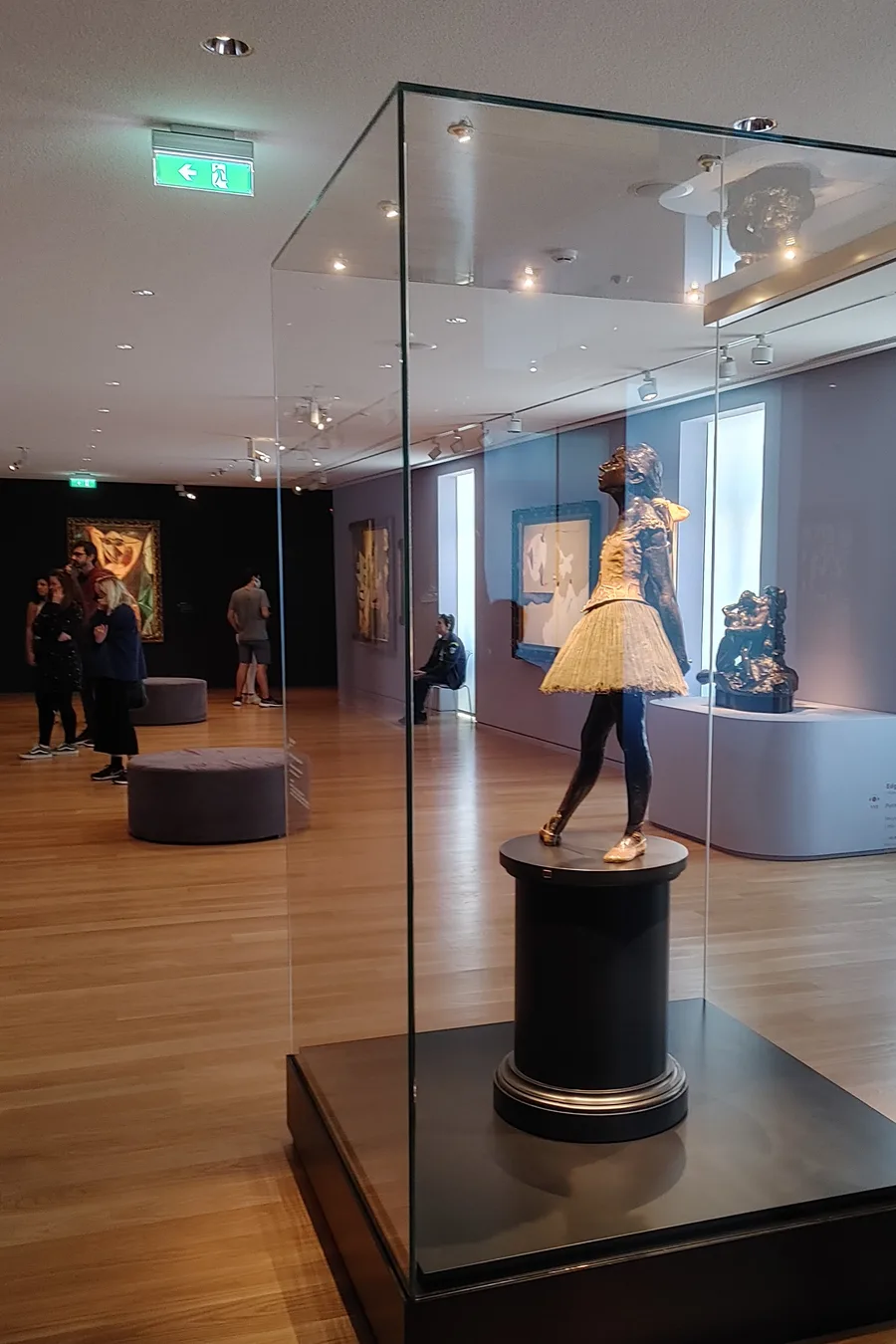 Foto: Rlbberlin, CC BY-SA 4.0, via Wikimedia Commons
Athens, Greece — collection of the Basil and Elise Goulandris Foundation
Collecting contemporary art takes place close to the moment of its creation. Artists are still developing their practice, exhibitions create opportunities for interpretation, and specialist judgements emerge alongside changes in the work itself. Collectors make choices within this unfinished process. They consider a work that has attracted them in relation to earlier works, while recognising that future developments may change their understanding.
This proximity allows collectors to meet artists and learn about the circumstances of their work. It also calls for independent judgement. An artist’s explanation, a gallery’s presentation and a critical essay offer different insights; collectors weigh them against their own experience of looking. A choice becomes meaningful when a collector can explain what they have recognised in a work and why they want to return to it.
Knowing an artist’s practice
Following an artist involves an interest that lasts beyond a single exhibition. Attention turns to relationships between works, changes in method and questions that reappear in different forms. An individual work then becomes easier to understand: it may mark the start of an exploration, its deepening, or a moment when the artist leaves an earlier approach behind.
Works a collector will never buy also matter. They enable comparisons and a more precise understanding of the collector’s own choices. Visits to exhibitions and studios, catalogue reading and conversations with art historians gradually broaden knowledge of an artist’s practice. Looking itself changes in the process. A quality that went unnoticed on a first encounter may later become a particular source of interest.
A purchase that grows out of this sustained attention has its justification in the work. Its place in a collection is defined by relationships with other works and the questions the collector explores through their choices.
Young artists and early works
When choosing work by a young artist, a collector often has limited exhibition records and critical writing to draw on. The work itself therefore deserves particular attention: how an idea is realised, the relationship to the chosen material and the consistency of the approach. Judgement rests on what the artist has achieved, while remaining open to future development.
An early purchase can have an immediate effect on the conditions in which an artist continues to work. Its longer-term significance will emerge through the subsequent life of the acquired work. A preserved work may later help identify the beginnings of a particular method or reconstruct a series that was not fully presented at the time.
Even apparently simple details deserve to be recorded: the year, title, place within a series and circumstances of the first exhibition. While the artist is available, uncertainties that might otherwise remain unresolved can be clarified. In doing so, collectors preserve sources for the future study of a practice whose history has yet to be written.
From individual choices to a collection
A collection takes shape gradually. Its direction may grow out of a sustained interest in one artist, a particular period or an artistic question. It may also become apparent retrospectively, when works of different origins establish relationships the collector did not anticipate when buying them.
These relationships give a collection its character. One work changes the way another is seen; displaying them together reveals both affinities and differences. Collectors reconsider their choices, add to them and occasionally question them. Through this process, a whole emerges whose qualities can be described and studied.
Working with an art historian allows this whole to be examined more closely. Research into individual works, their exhibition histories and their place within an artist’s practice creates opportunities to present the collection beyond its owner’s private experience.
Responsibility towards the work
Entering a collection gives a work new conditions of care and display. In contemporary art, these conditions sometimes require direct consultation with the artist. Materials may change over time, an installation may depend on its surroundings, and technical components may require maintenance or replacement. The artist’s instructions then become part of the documentation needed for future presentation.
A collection’s records document acquisition, condition on receipt, later interventions and exhibitions. Photographs and relevant correspondence are preserved. These records help distinguish the original characteristics of a work from changes that have occurred over its lifetime.
Responsibility also includes accessibility. Lending a work to an exhibition or allowing a researcher to study it can bring it back into consideration of the artist’s practice. When works are dispersed across private collections, cooperation between collectors often makes it possible to reconnect them.
In this sense, collecting is also part of the history of contemporary art’s reception. Collectors’ choices reflect the interests of their time, while preserved works and documentation provide a basis for future interpretation. The final judgement remains open. The collector’s responsibility is to ensure that what they have chosen remains preserved, identifiable and available for study.